

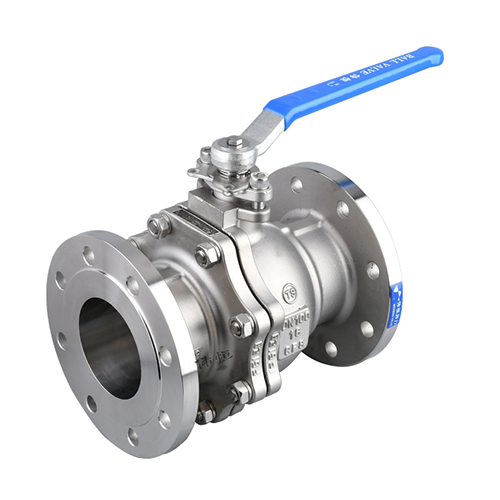
High-Pressure Sanitary Pipe Fittings for Industrial Use
Industry Background and Market Demand
The demand for high-pressure sanitary pipe fittings has grown significantly across industries where hygiene, durability, and pressure resistance are critical. Sectors such as pharmaceuticals, food and beverage, biotechnology, and chemical processing require piping systems that can withstand extreme pressures while maintaining strict sanitary standards. Regulatory frameworks like ASME BPE, EHEDG, and 3-A Sanitary Standards further drive the need for precision-engineered fittings that minimize contamination risks.
Market trends indicate a shift toward modular and CIP (Clean-in-Place) compatible designs, reducing downtime in production lines. Additionally, the rise of single-use systems in biopharmaceuticals has increased demand for fittings that balance high-pressure performance with easy disassembly and sterilization.
Core Concepts and Key Technologies
High-pressure sanitary pipe fittings are designed to maintain system integrity under pressures exceeding standard sanitary applications (typically 10 bar or higher). Key technologies include:
- Sealing Mechanisms: Advanced gasket materials (e.g., EPDM, PTFE) and compression fittings ensure leak-proof connections under dynamic pressure conditions.
- Surface Finish: Electropolished interiors (Ra ≤ 0.5 µm) prevent bacterial adhesion and facilitate cleaning.
- Clamp Systems: Tri-clamp and DIN 11851 fittings provide secure, quick-release connections without compromising pressure resistance.
Product Structure, Materials, and Manufacturing
Materials
- Stainless Steel Grades: 316L is the standard for corrosion resistance, while alloyed variants (e.g., 904L) are used in highly corrosive environments.
- Plastics: PTFE-lined fittings are employed in ultra-pure applications where metal ions are a concern.
Manufacturing Processes
- Cold Forging: Enhances mechanical strength by aligning grain structures.
- Orbital Welding: Ensures contamination-free, high-integrity joints for critical applications.
- Laser Profiling: Achieves precise tolerances for mating surfaces.
Critical Factors Affecting Quality and Performance
1. Material Purity: Low-carbon stainless steel prevents sensitization and intergranular corrosion.
2. Dimensional Accuracy: Misaligned fittings increase turbulence, leading to particle accumulation.
3. Pressure Ratings: Fittings must be tested to 1.5x the maximum operating pressure (per ASME B31.3).
4. Surface Roughness: A mirror finish (Ra ≤ 0.38 µm) is essential for CIP/SIP (Steam-in-Place) compatibility.
Supplier Selection Criteria
When sourcing high-pressure sanitary fittings, consider:
- Certifications: Compliance with FDA, EC 1935/2004, or other regional standards.
- Testing Protocols: Suppliers should provide hydrostatic and helium leak test reports.
- Traceability: Full material certificates (MTRs) and heat numbers for quality assurance.
Common Challenges and Industry Pain Points
- Cost vs. Performance Trade-offs: High-grade materials and precision machining increase costs.
- Compatibility Issues: Mixing fittings from different manufacturers can lead to sealing failures.
- Maintenance Complexity: Improper handling during disassembly can damage sealing surfaces.
Applications and Case Studies
Pharmaceuticals
A biotech firm replaced threaded connections with hygienic clamp fittings, reducing contamination incidents by 40% and cutting sterilization time by 25%.
Food Processing
A dairy plant upgraded to high-pressure fittings with CIP compatibility, eliminating biofilm buildup in UHT (Ultra-High Temperature) lines.
Current Trends and Future Outlook
1. Smart Fittings: Embedded sensors for real-time pressure and temperature monitoring.
2. Additive Manufacturing: 3D-printed fittings with optimized flow paths for reduced pressure drops.
3. Sustainable Materials: Development of bio-based gaskets and recyclable alloys.
FAQ
Q: How do high-pressure sanitary fittings differ from standard sanitary fittings?
A: They feature reinforced geometries, higher-grade materials, and undergo rigorous pressure testing.
Q: Can these fittings be autoclaved?
A: Yes, provided they are made of autoclave-compatible materials (e.g., 316L stainless steel).
Q: What is the typical lifespan of these fittings?
A: With proper maintenance, 10–15 years in non-corrosive environments.
By addressing these technical and operational aspects, manufacturers and engineers can optimize their fluid handling systems for reliability and compliance in high-pressure sanitary applications.
Tel: +86 577 8699 9257
Tel: +86 135 8786 5766 /+86 137 32079372
E-mail: wzweiheng@163.com
Endereço: Não. 1633, Yidaoba Road, Parque Industrial Binhai, cidade de Wenzhou, província de Zhejiang

Digitalizar wechat
Copyright © 2025 Zhejiang Weiheng Fluid Equipment Co., Ltd Todos os direitos reservados.
Este site usa cookies para garantir que você tenha a melhor experiência em nosso site.
 English
 Español
 Pусский
 Français
 Deutsch
 한국어
한국어 العربية
 Italiano
 ไทย
ไทย Türk dili
 हिन्दी
 Melayu
 Tiếng Việt
 dansk
dansk қазақ
қазақ বাংলা
বাংলা українська
 Filipino
 o'zbek



 Telefone
Comente
(0)